{D}
prologue
{D}



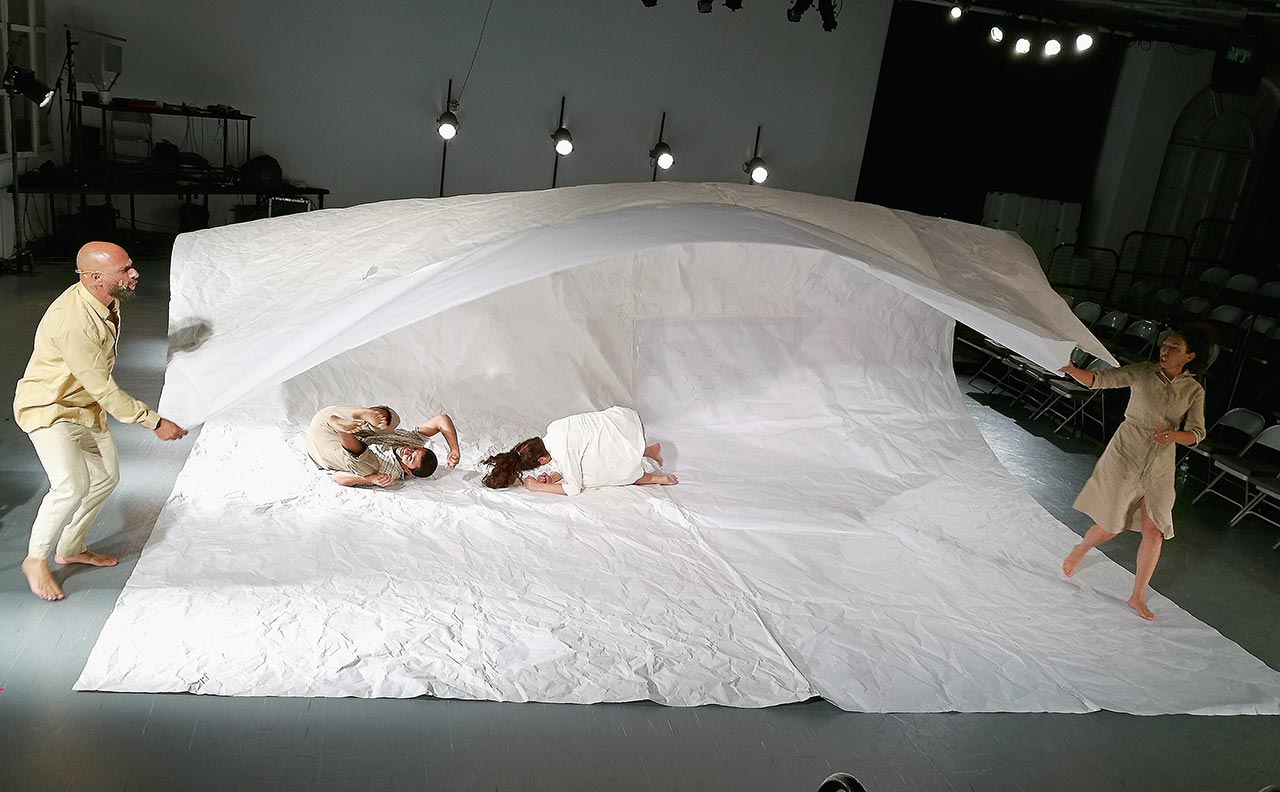
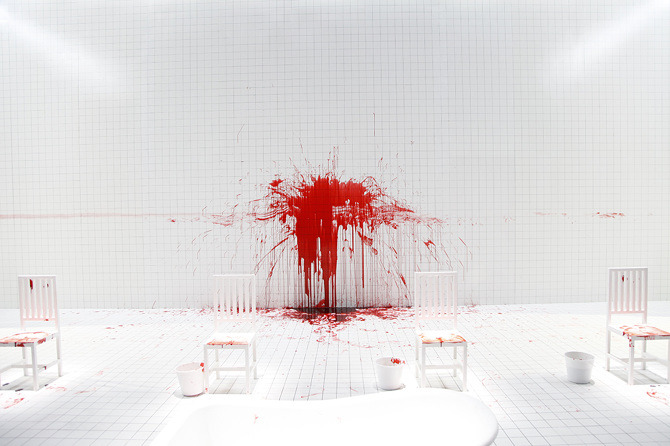
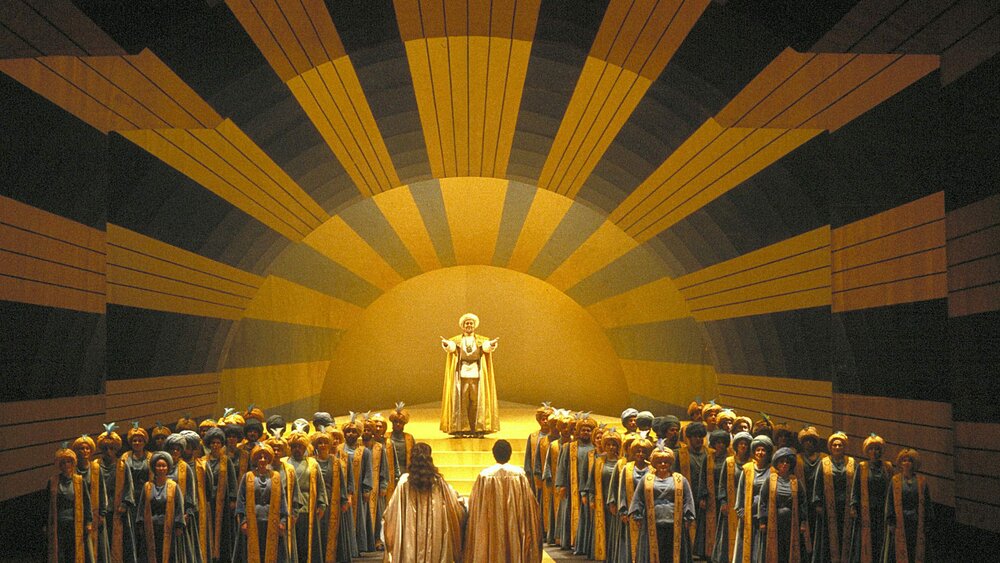
01 THE SCENIC DESIGNER
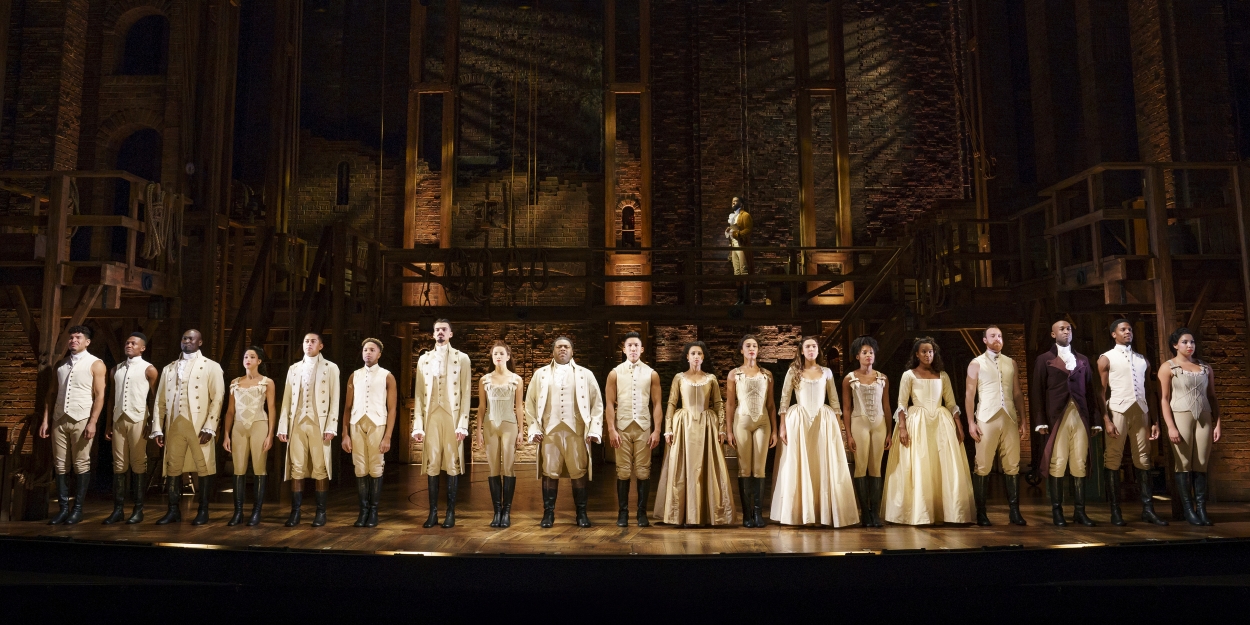
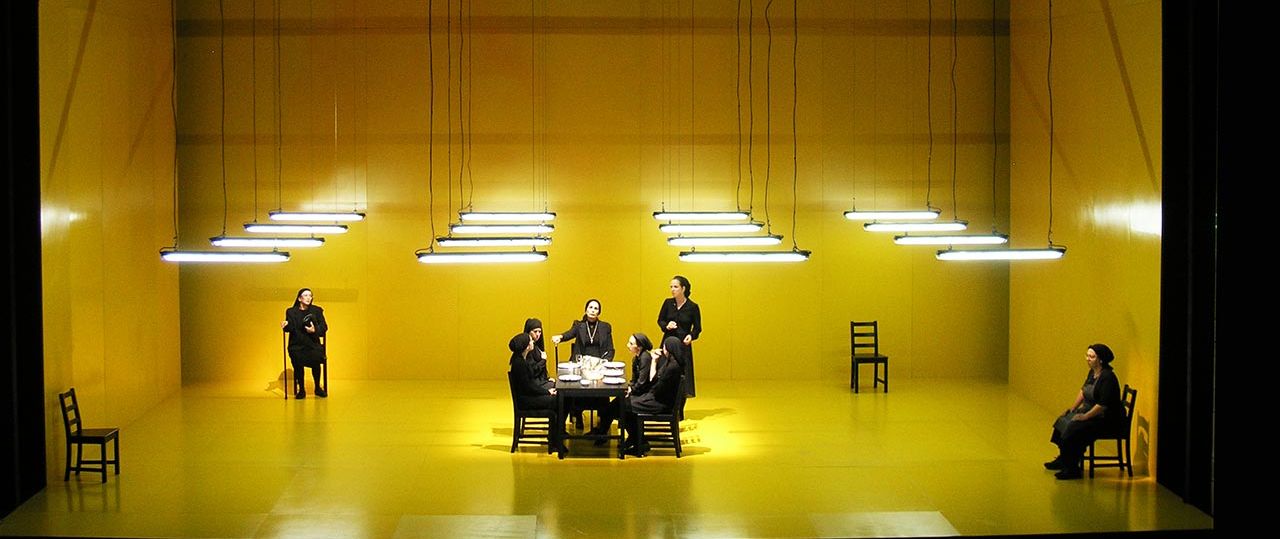
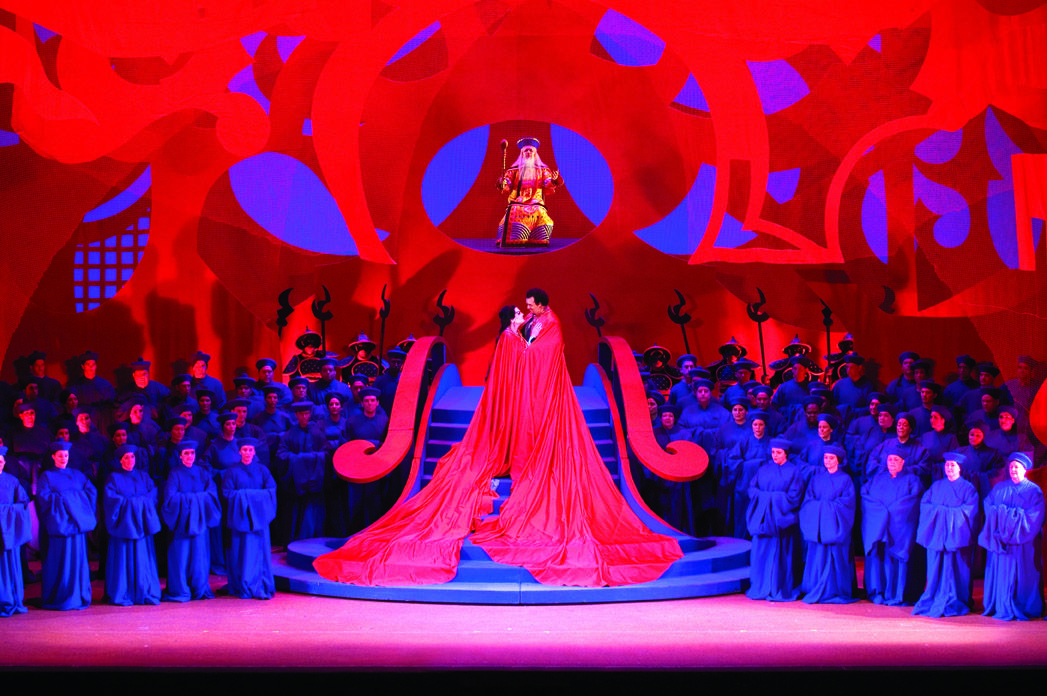
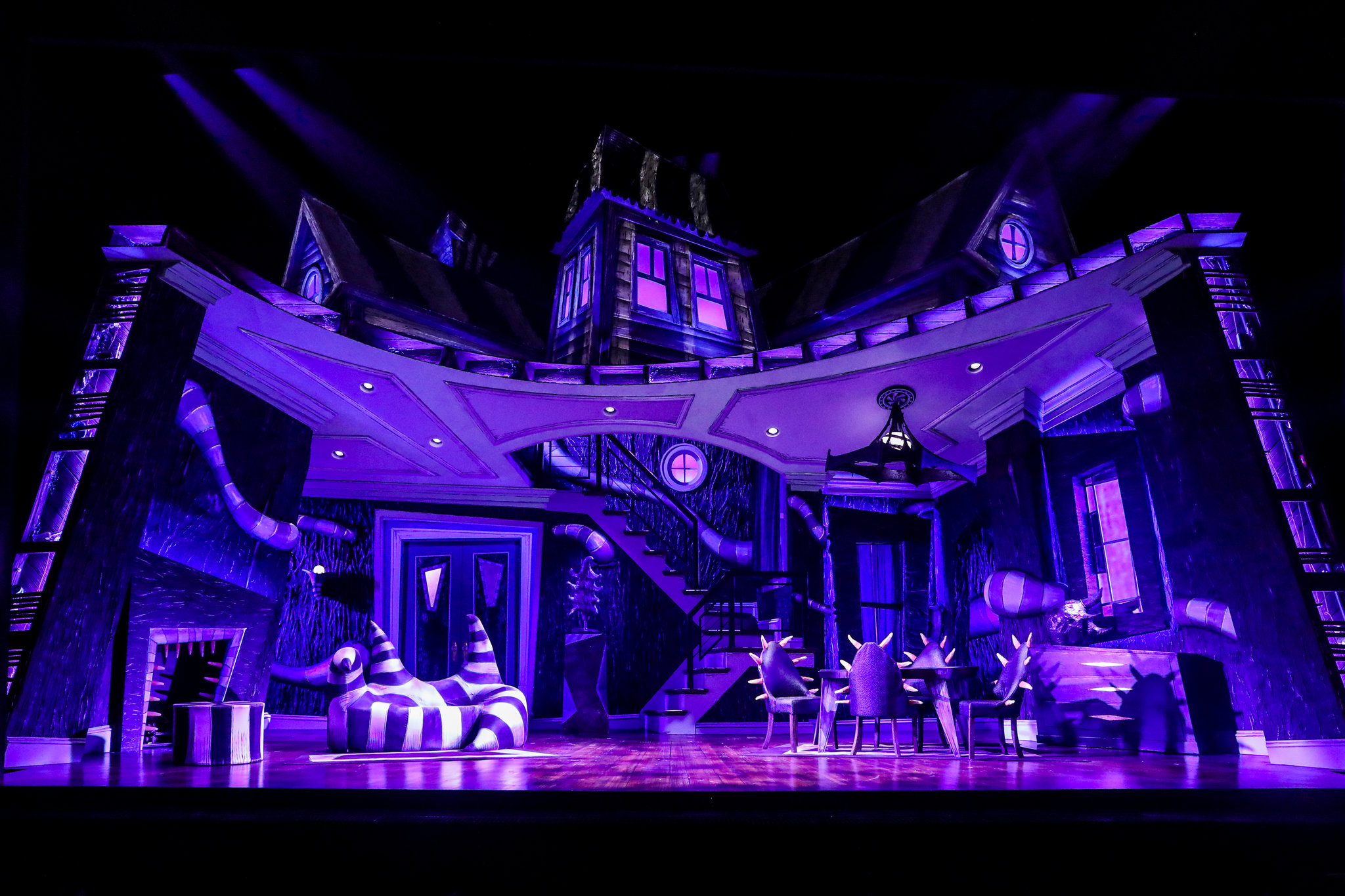
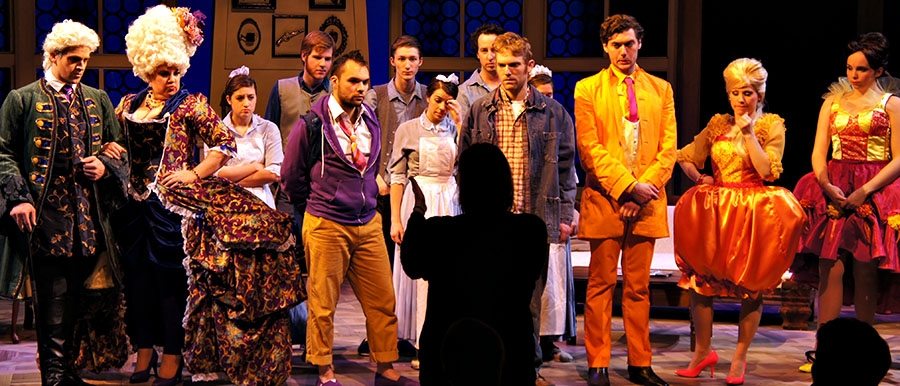
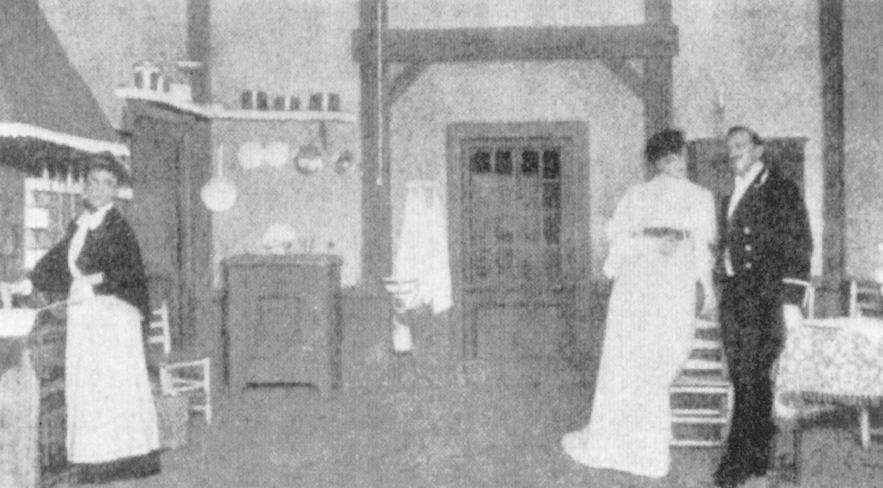
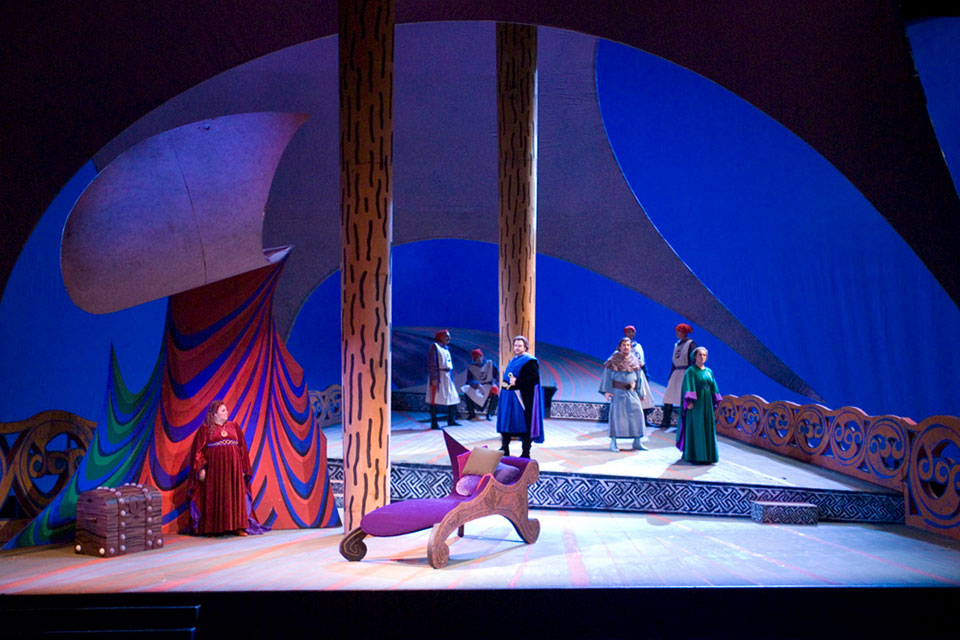
The scenic designer works with the director and other designers to establish an overall visual concept for the production and design the stage environment. They are responsible for developing a complete set of design drawings that include the following: --basic ground plan showing all stationary and scenic elements. fjfcomposite ground plan showing all moving scenic elements, indicating both their onstage and storage positions.jf section of the stage space incorporating all elements.fjffront elevations of every scenic element, and additional elevations or sections of units as required. All of these required drawing elements can be easily created from one accurate 3-D CAD model of the set design. In the process of planning, scenic designers often make models, ranging from very basic to extremely complex models. [ Image 01. arrives from the right side of the stage ] Models are often made before the final drawings that are delivered to the scene shop for construction. [ Image 02. enters into the front stage ] The starting point for a scenic designer is often the question: "How do we generate creative ideas?" A designer will search for evidence through research to produce conceptual ideas that best support the content and values of the design with visual elements. [ Image 03. arrives from the right side of the stage ] It has been argued that the most consuming part of expanding our horizons towards scenic concepts is much more than witnessing creativity and creative people - it begins with us opening our mind to various possibilities. It has been argued that to have an attitude toward learning, seeking, and engaging in creativity, and by willing to be adventurous, inquisitive and curious, the process of scenic. It has been argued that the most consuming part of expanding our horizons towards scenic concepts is much more than witnessing creativity and creative people - it begins with us opening our mind to various possibilities. It has been argued that to have an attitude toward learning, seeking, and engaging in creativity, and by willing to be adventurous, inquisitive and curious, the process of scenic design will be greatly benefitted. [ Image 4. enters from the left side of the stage ] The imagination is highly visual.Whether outside or inside, colorful trees or concerts, star lit skies or the architecture of a great building, scenic design is a process of discovery. Discovering what will best clarify and support the setting, environment, atmosphere, ambience, & world that is being created.
Responsibilities of the set designer ↓
---The scenic designer is responsible for collaborating with the theatre director and other members of the creative team to create an environment for the production.---Scenic designers are responsible for creating scale models of the scenery, renderings, paint elevations and scale construction drawings as part of their communication with other production staff.---Communicating the details of the scenic environment to the technical director, production manager, charge scenic artist and prop master are among the most important duties of a scenic designer. [ Image 5. enters into the front stage ]
Training
In Europe and Australia, scenic designers take a more holistic approach to theatrical design and will often be responsible not only for scenic design but costume, lighting and sound and are referred to as theatre designers or scenographers or production designers. [ Image 6. arrives from the left side of the stage ]
scene 01
scene
02
scene 03
scene 04
scene 05
scene 06
scene 07
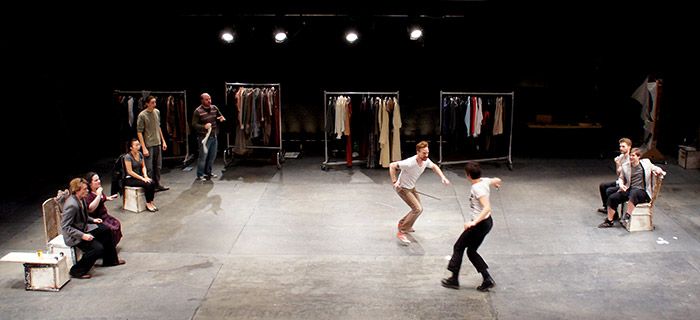
02 The director
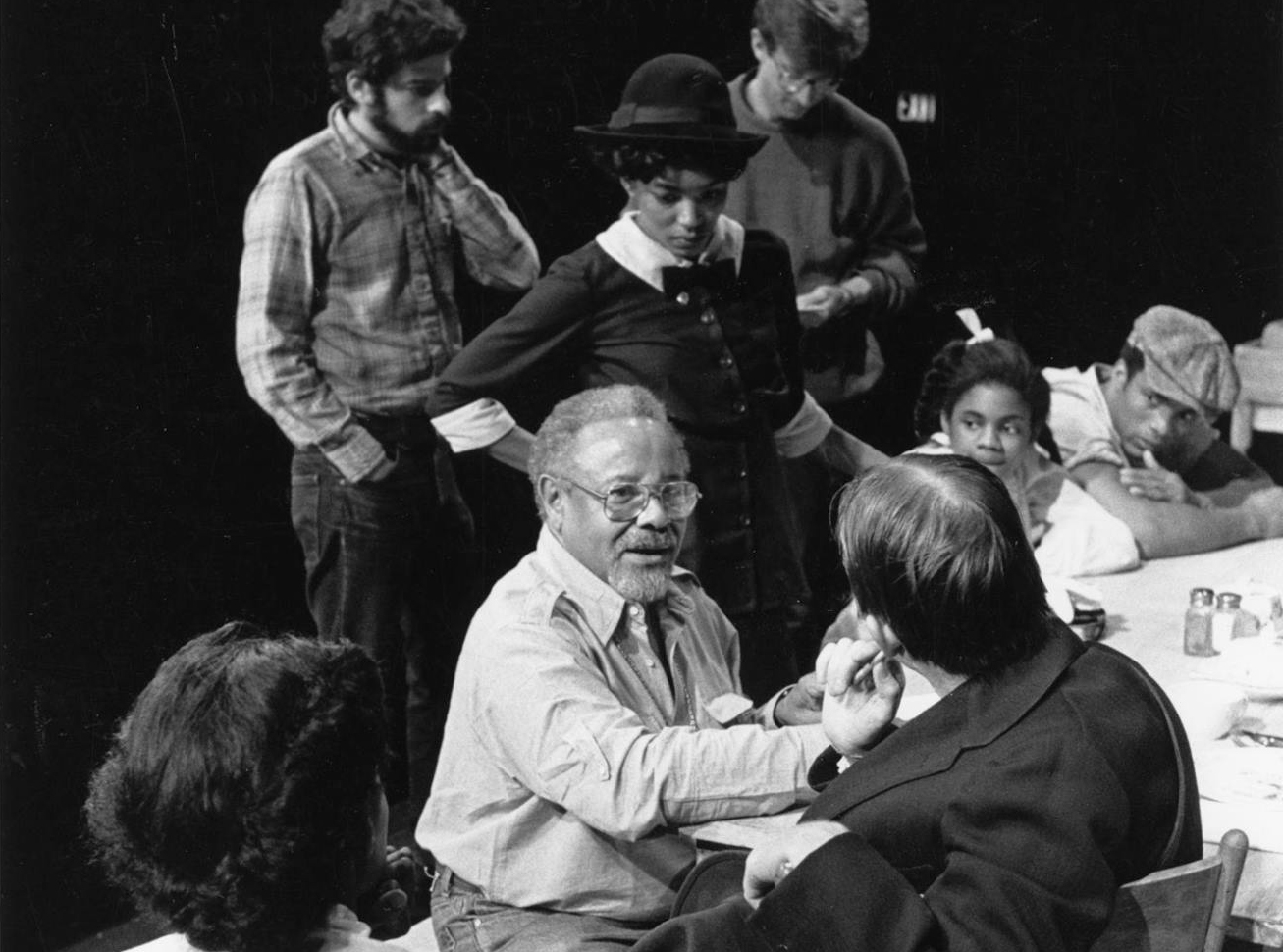
↓A theatre director or stage director is a professional in the theatre field who oversees and orchestrates the mounting of a theatre production such as a play, opera, dance, drama, musical theatre performance, etc. by unifying various endeavors and aspects of production. The director's function is to ensure the quality and completeness of theatre production and to lead the members of the creative team into realizing their artistic vision for it. The director thereby collaborates with a team of creative individuals and other staff to coordinate research and work on all the aspects of the production which includes the Technical and the Performance aspects. The technical aspects include: stagecraft, costume design, theatrical properties (props), lighting design, set design, and sound design for the production. The performance aspects include: acting, dance, orchestra, chants, and stage combat. [ Image 7. enters into the front stage ] If the production is a new piece of writing or a (new) translation of a play, the director may also work with the playwright or a translator. In contemporary theatre, after the playwright, the director is generally the principle visionary, making decisions on the artistic conception and interpretation of the play and its staging. Different directors occupy different places of authority and responsibility, depending on the structure and philosophy of individual theatre companies. Directors use a wide variety of techniques, philosophies, and levels of collaboration. [ Image 8. enters from the left side of the stage ]
The director in theatre history
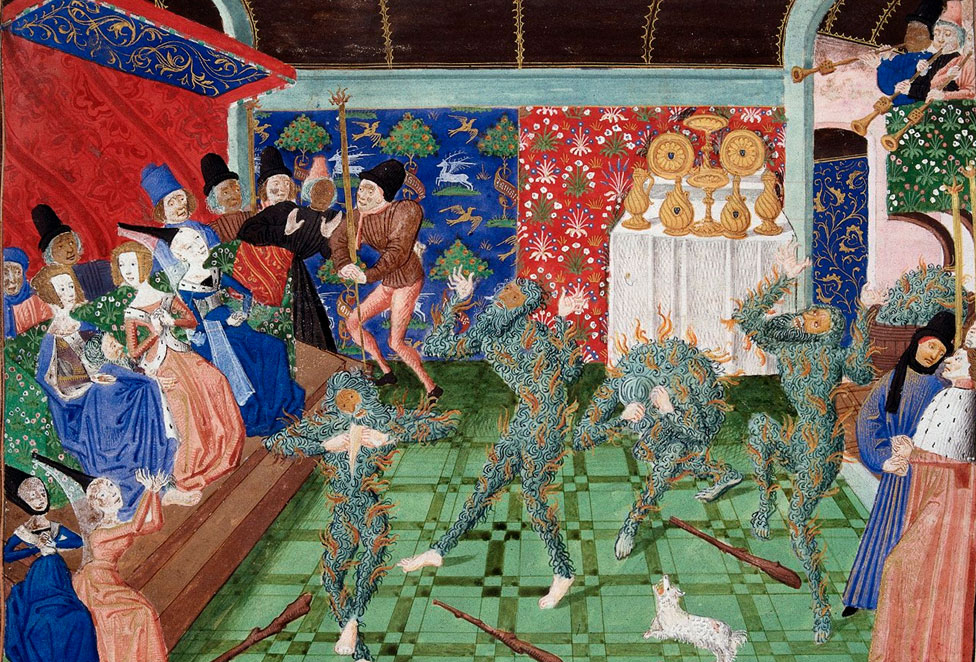
In ancient Greece, the birthplace of European drama, the writer bore principal responsibility for the staging of his plays. Actors were generally semi-professionals, and the director oversaw the mounting of plays from the writing process all the way through to their performance, often acting in them too, as Aeschylus for example did. The author-director would also train the chorus, sometimes compose the music, and supervise every aspect of production. The fact that the director was called didaskalos, the Greek word for "teacher," indicates that the work of these early directors combined instructing their performers with staging their work. [ Image 9. arrives from the right side of the stage ] In medieval times, the complexity of vernacular religious drama, with its large scale mystery plays that often included crowd scenes, processions and elaborate effects, gave the role of director (or stage manager or pageant master) considerable importance. A miniature by Jean Fouquet from 1460 bears one of the earliest depictions of a director at work. Holding a prompt book, the central figure directs, with the aid of a long stick, the proceedings of the staging of a dramatization of the Martyrdom of Saint Apollonia. According to Fouquet, the director's tasks included overseeing the erecting of a stage and scenery (there were no permanent, purpose-built theatre structures at this time, and performances of vernacular drama mostly took place in the open air), casting and directing the actors (which included fining them for those that infringed rules), and addressing the audience at the beginning of each performance and after each intermission. [ Image 10. arrives from the right side of the stage ] From Renaissance times up until the 19th century, the role of director was often carried by the actor-manager. This would usually be a senior actor in a troupe who took the responsibility for choosing the repertoire of work, staging it and managing the company. This was the case for instance with Commedia dell'Arte companies and English actor-managers like Colley Cibber and David Garrick. [ Image 11. enters from the left side of the stage ] The modern theatre director can be said to have originated in the staging of elaborate spectacles of the Meininger Company under George II, Duke of Saxe-Meiningen. The management of large numbers of extras and complex stagecraft matters necessitated an individual to take on the role of overall coordinator. This gave rise to the role of the director in modern theatre, and Germany would provide a platform for a generation of emerging visionary theatre directors, such as Erwin Piscator and Max Reinhardt. Simultaneously, Constantin Stanislavski, principally an actor-manager, would set up the Moscow Art Theatre in Russia and similarly emancipate the role of the director as artistic visionary. The French regisseur is also sometimes used to mean a stage director, most commonly in ballet. A more common term for theatre director in French is metteur en scène. [ Image 12. enters into the front stage ] Post World War II, the actor-manager slowly started to disappear, and directing become a fully fledged artistic activity within the theatre profession. The director originating artistic vision and concept, and realizing the staging of a production, became the norm rather than the exception. Great forces in the emancipation of theatre directing as a profession were notable 20th-century theatre directors like Vladimir Nemirovich-Danchenko, Vsevolod Meyerhold, Yevgeny Vakhtangov, Michael Chekhov, Yuri Lyubimov (Russia), Orson Welles, Peter Brook, Peter Hall (Britain), Bertolt Brecht (Germany), Giorgio Strehler, and Franco Zeffirelli (Italy). [ Image 13. enters from the left side of the stage ] A cautionary note was introduced by the famed director Sir Tyrone Guthrie who said "the only way to learn how to direct a play, is ... to get a group of actors simple enough to allow you to let you direct them, and direct". [ Image 14. arrives from the right side of the stage ] A number of seminal works on directing and directors include Toby Cole and Helen Krich's 1972 Directors on Directing: A Sourcebook of the Modern Theatre, Edward Braun's 1982 book The Director and the Stage: From Naturalism to Growtowski, and Will's The Director in a Changing Theatre (1976).
Directing education
ecause of the relatively late emergence of theatre directing as a performing arts profession when compared with for instance acting or musicianship, a rise of professional vocational training programmes in directing can be seen mostly in the second half of the 20th century. Most European countries nowadays know some form of professional directing training, usually at drama schools or conservatoires, or at universities. In Britain, the tradition that theatre directors emerge from degree courses (usually in English literature) at the Oxbridge universities has meant that for a long time, professional vocational training did not take place at drama schools or performing arts colleges, although an increase in training programmes for theatre directors can be witnessed since the 1970s and 1980s. In American universities, the seminal directing program at the Yale School of Drama produced a number of pioneering directors with D.F.A. (Doctor of Fine Arts) and M.F.A. degrees in Drama (rather than English) who contributed to the expansion of professional resident theaters in the 1960s and 1970s. In the early days such programmes typically led to the staging of one major thesis production in the third (final) year. At the University of California, Irvine, Keith Fowler (a Yale D.F.A. and ex-producer of two LORT companies) led for many years a graduate programme based on the premise that directors are autodidacts who need as many opportunities to direct as possible. Under Fowler, graduate student directors would stage between five and ten productions during their three-year residencies, with each production receiving detailed critiques. [ Image 15. enters from the left side of the stage ] As with many other professions in the performing arts, theatre directors would often learn their skills "on the job"; to this purpose, theaters often employ trainee assistant directors or have in-house education schemes to train young theatre directors. Examples are the Royal National Theatre in London, which frequently organizes short directing courses, or the Orange Tree Theatre and the Donmar Warehouse on London's West End, which both employ resident assistant directors on a one-year basis
for training purposes.
Styles of directing
Directing is an art form that has grown with the development of theatre theory and theatre practice. With the emergence of new trends in theatre, so too have directors adopted new methodologies and engaged in new practices. Interpretation of the drama, by the late twentieth century, had become central to the director's work. Relativism and psychoanalytic theory influenced the work of innovative directors such as Peter Brook, Ingmar Bergman, Peter Stein, and Giorgio Strehler) [ Image 16. enters into the front stage ] Kimberly Senior, director of Disgraced on Broadway, explains her role as director by saying “I get to take things that were previously in one dimension and put them into three dimensions using my imagination and intellect and people skills.” [ Image 17. arrives from the right side of the stage ] Once a show has opened (premiered before a regular audience), theatre directors are generally considered to have fulfilled their function. From that point forward the stage manager is left in charge of all essential concerns.
scene 08
scene 09
scene 010
scene 011
scene 012
scene 013
scene 014
scene 015
scene 016
scene 017
scene 018
scene 019
scene 020
scene 021
scene 022
scene 024
scene 025
scene 026
scene 026
scene 027
scene 028
scene 029
scene 030
scene 031
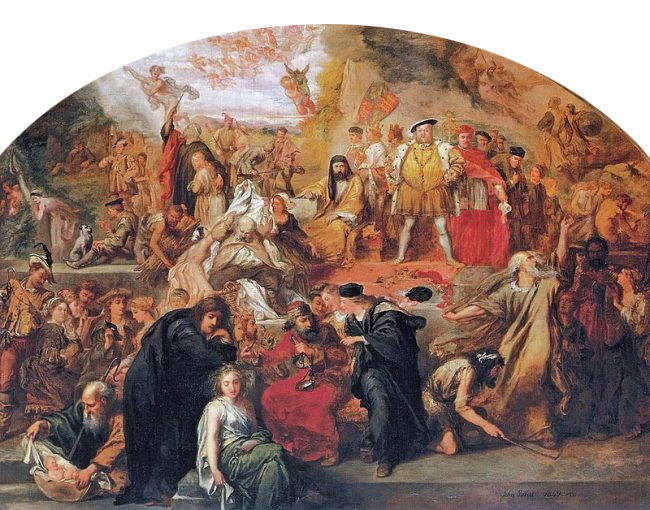
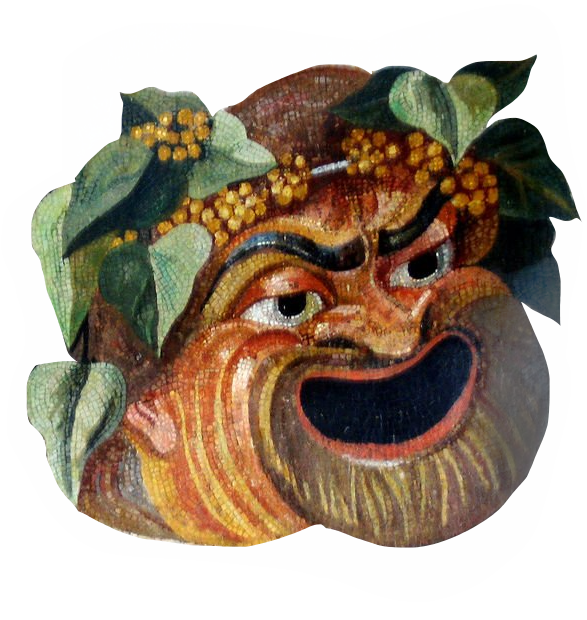
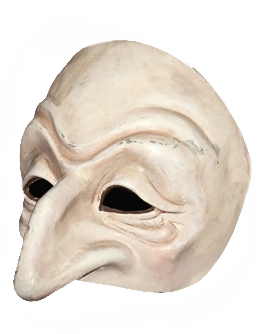
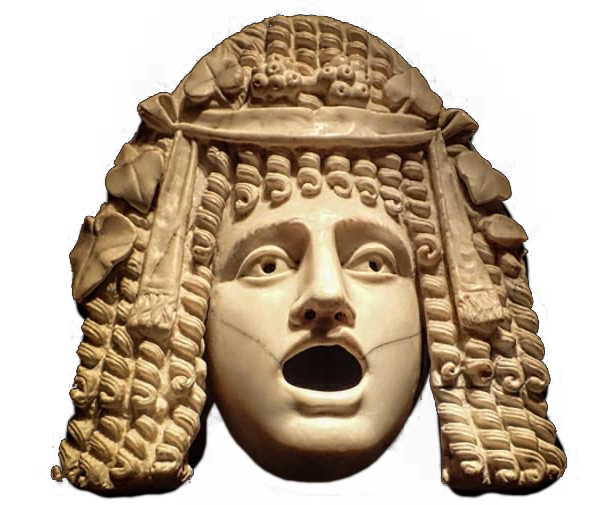
03 The actor ↓
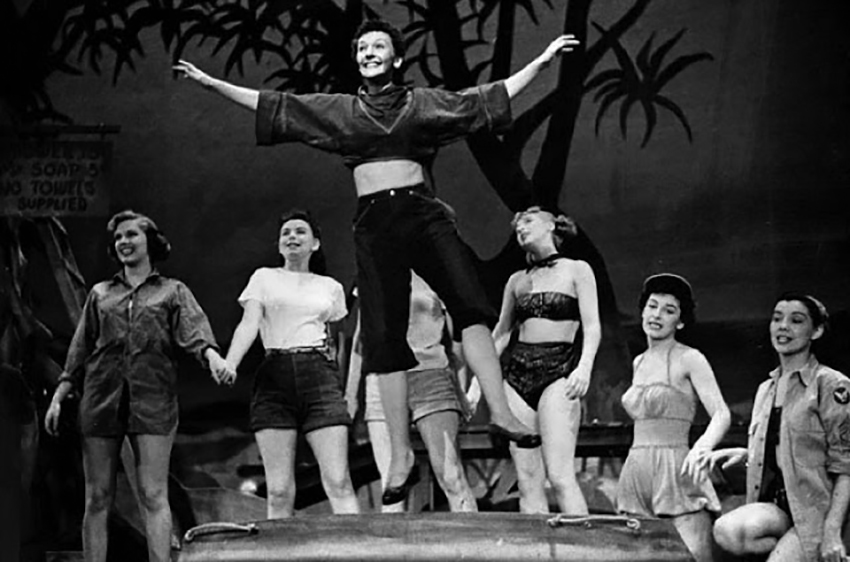
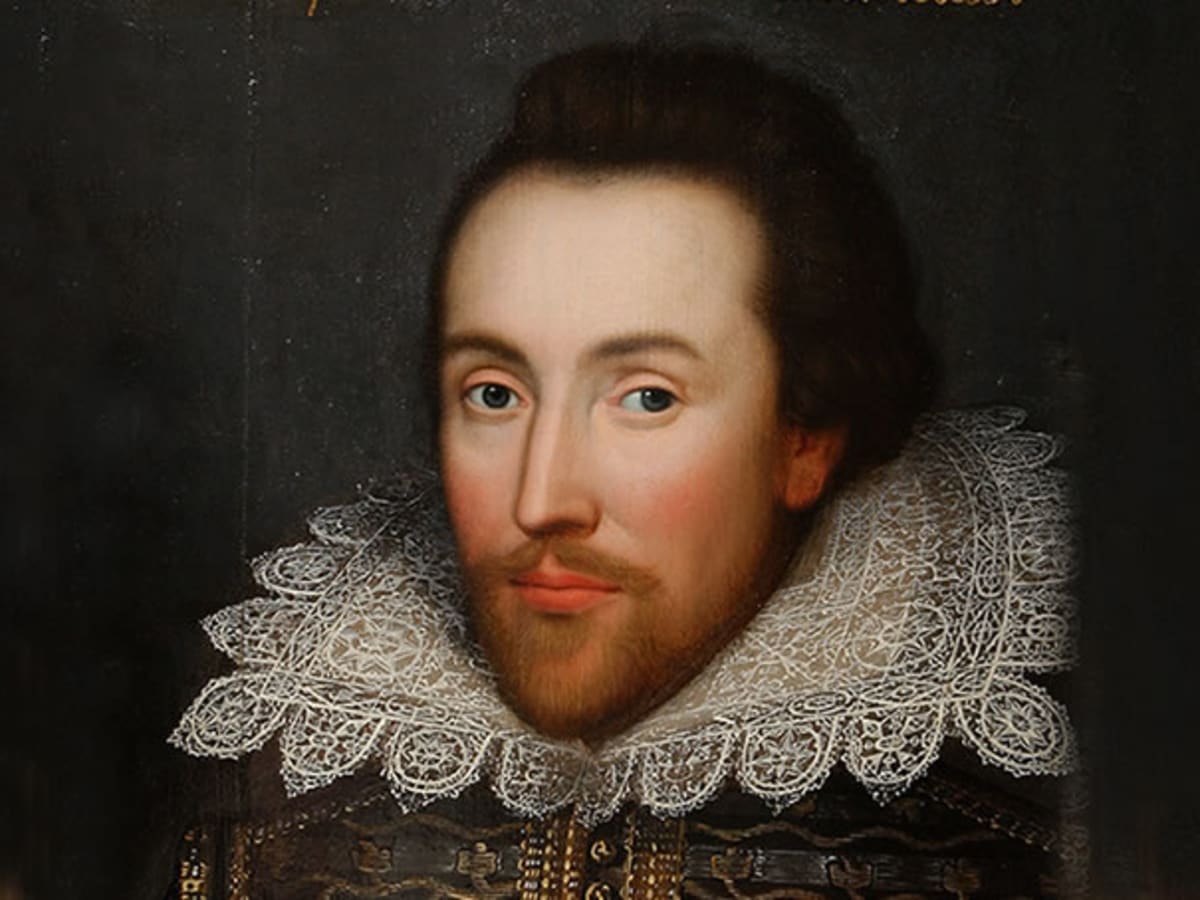
Theater actors embody roles that a playwright has written, not only performing the lines, but imbuing the characters with mannerisms and physical characteristics. But before setting foot on stage, actors must review scripts and then audition to get a part in a production. In addition to memorizing lines, they also research their characters. [ Image 18. enters from the left side of the stage ] Formerly, in ancient Greece and the medieval world, and in England at the time of William Shakespeare, only men could become actors, and women's roles were generally played by men or boys. [ Image 19. enters into the front stage ] While Ancient Rome did allow female stage performers, only a small minority of them were given speaking parts. The commedia dell'arte of Italy, however, allowed professional women to perform early on; Lucrezia Di Siena, whose name is on a contract of actors from 10 October 1564, has been referred to as the first Italian actress known by name, with Vincenza Armani and Barbara Flaminia as the first primadonnas and the first well-documented actresses in Italy (and in Europe). After the English Restoration of 1660, women began to appear onstage in England. In modern times, particularly in pantomime and some operas, women occasionally play the roles of boys or young men.
History
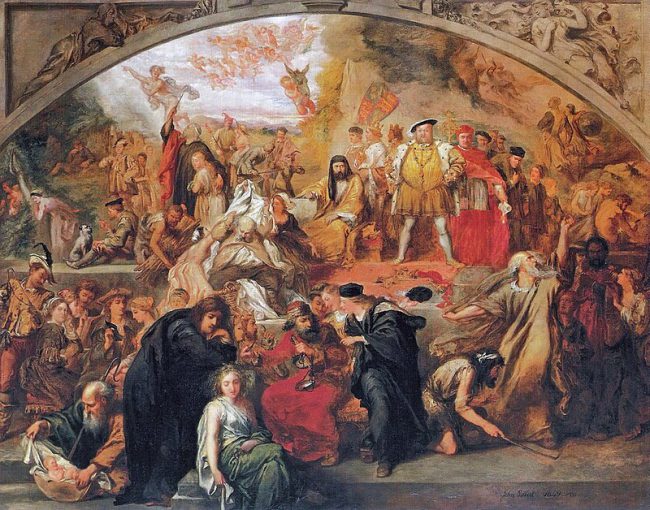
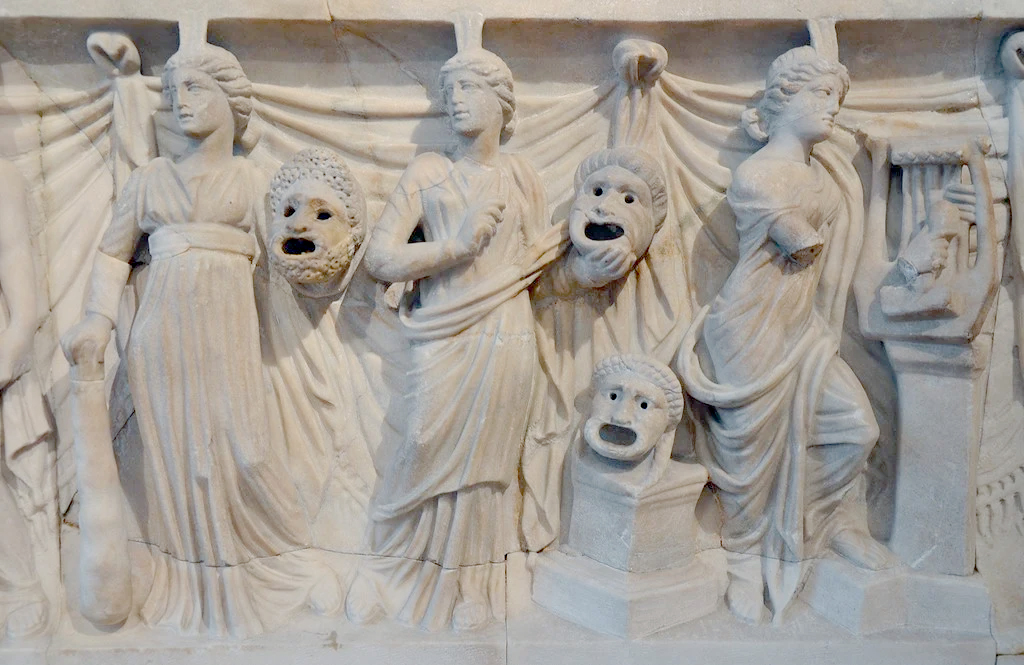
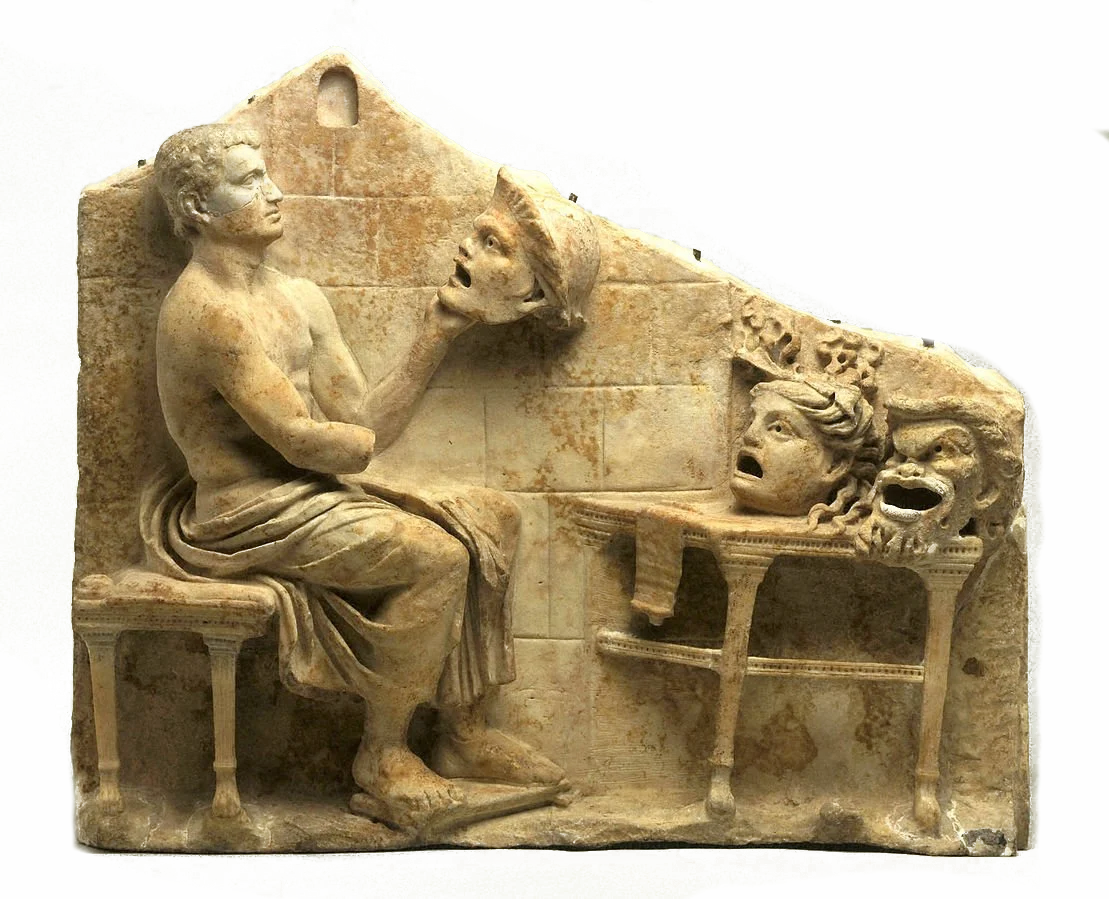
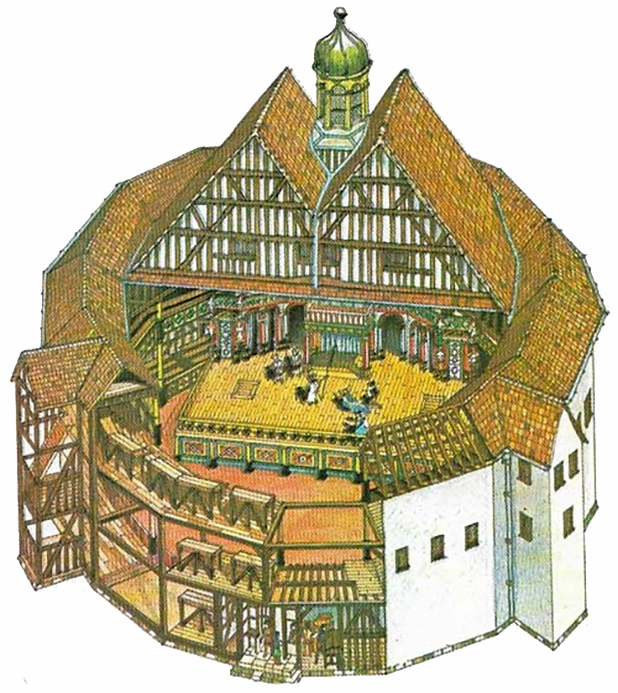
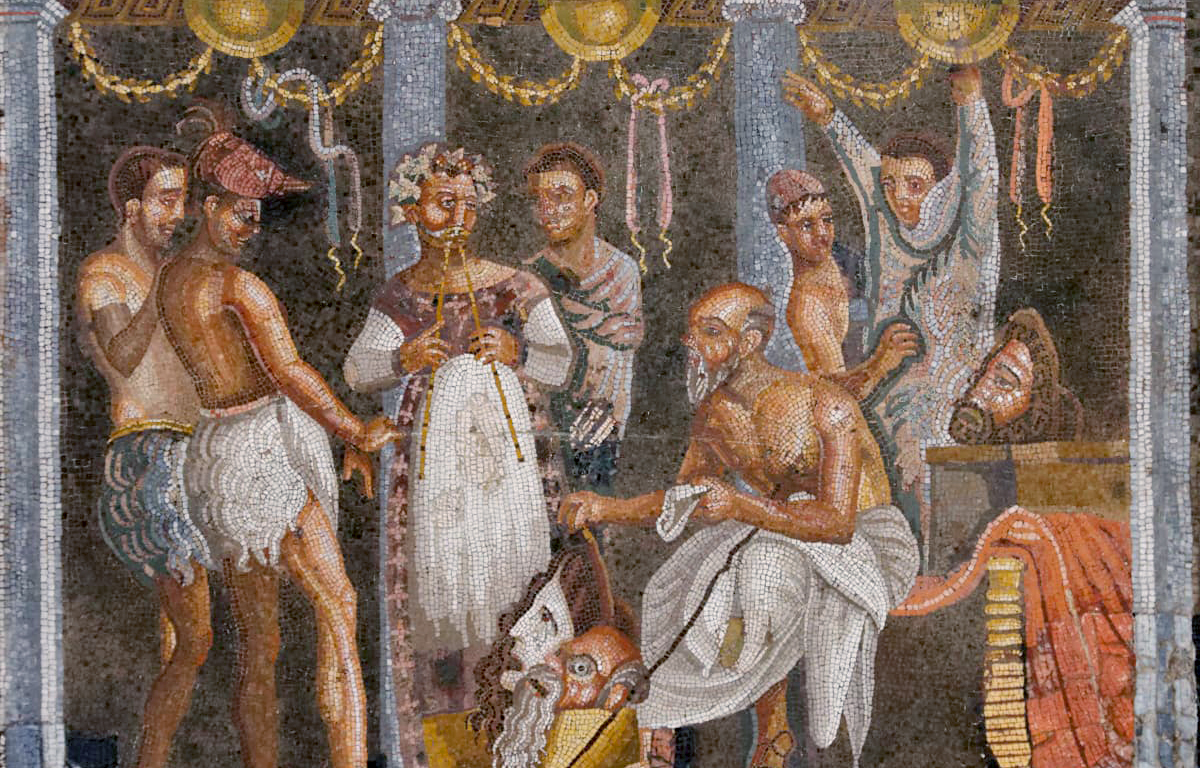
The first recorded case of a performing actor occurred in 534 BC (though the changes in the calendar over the years make it hard to determine exactly) when the Greek performer Thespis stepped onto the stage at the Theatre Dionysus to become the first known person to speak words as a character in a play or story. Before Thespis' act, Grecian stories were only expressed in song, dance, and in third person narrative. [ Image 20. arrives from the right side of the stage ] In honor of Thespis, actors are commonly called Thespians. The exclusively male actors in the theatre of ancient Greece performed in three types of drama: tragedy, comedy, and the satyr play.[ This developed and expanded considerably under the Romans. The theatre of ancient Rome was a thriving and diverse art form, ranging from festival performances of street theatre, nude dancing, and acrobatics, to the staging of situation comedies, to high-style, verbally elaborate tragedies. [ Image 21. enters from the left side of the stage ] As the Western Roman Empire fell into decay through the 4th and 5th centuries, the seat of Roman power was moved eastward to Constantinople. Records show that mime, pantomime, scenes or recitations from tragedies and comedies, dances, and other entertainments were very popular. From the 5th century, Western Europe was plunged into a period of general disorder. Small nomadic bands of actors traveled around Europe throughout the period, performing wherever they could find an audience; there is no evidence that they produced anything but crude scenes. Traditionally, actors were not of high status; therefore, in the Early Middle Ages, traveling acting troupes were often viewed with distrust. Early Middle Ages actors were denounced by the Church during the Dark Ages, as they were viewed as dangerous, immoral, and pagan. In many parts of Europe, traditional beliefs of the region and time meant actors could not receive a Christian burial. [Image 22. enters into the front stage] In the Early Middle Ages, churches in Europe began staging dramatized versions of biblical events. By the middle of the 11th century, liturgical drama had spread from Russia to Scandinavia to Italy. The Feast of Fools encouraged the development of comedy. In the Late Middle Ages, plays were produced in 127 towns. These vernacular Mystery plays often contained comedy, with actors playing devils, villains, and clowns. The majority of actors in these plays were drawn from the local population. Amateur performers in England were exclusively male, but other countries had female performers. [ Image 23. enters from the left side of the stage ] There were several secular plays staged in the Middle Ages, the earliest of which is The Play of the Greenwood by Adam de la Halle in 1276. It contains satirical scenes and folk material such as faeries and other supernatural occurrences. Farces also rose in popularity after the 13th century. At the end of the Late Middle Ages, professional actors began to appear in England and Europe. Richard III and Henry VII both maintained small companies of professional actors. Beginning in the mid-16th century, Commedia dell'arte troupes performed lively improvisational playlets across Europe for centuries. Commedia dell'arte was an actor-centred theatre, requiring little scenery and very few props. Plays were loose frameworks that provided situations, complications, and the outcome of the action, around which the actors improvised. The plays used stock characters. A troupe typically consisted of 13 to 14 members. Most actors were paid a share of the play's profits roughly equivalent to the sizes of their roles. [ Image 24. enters from the left side of the stage ] Renaissance theatre derived from several medieval theatre traditions, such as the mystery plays, "morality plays", and the "university drama" that attempted to recreate Athenian tragedy. The Italian tradition of Commedia dell'arte, as well as the elaborate masques frequently presented at court, also contributed to the shaping of public theatre. Since before the reign of Elizabeth I, companies of players were attached to the households of leading aristocrats and performed seasonally in various locations. These became the foundation for the professional players that performed on the Elizabethan stage. [ Image 25. arrives from the right side of the stage ] The development of the theatre and opportunities for acting ceased when Puritan opposition to the stage banned the performance of all plays within London. Puritans viewed the theatre as immoral. The re-opening of the theatres in 1660 signaled a renaissance of English drama. English comedies written and performed in the Restoration period from 1660 to 1710 are collectively called "Restoration comedy". Restoration comedy is notorious for its sexual explicitness. At this point, women were allowed for the first time to appear on the English stage, exclusively in female roles. This period saw the introduction of the first professional actresses and the rise of the first celebrity actors.
Techniques
fjf Classical acting is a philosophy of acting that integrates the expression of the body, voice, imagination, personalizing, improvisation, external stimuli, and script analysis. It is based on the theories and systems of select classical actors and directors including Konstantin Stanislavski and Michel Saint-Denis.fjf In Stanislavski's system, also known as Stanislavski's method, actors draw upon their own feelings and experiences to convey the "truth" of the character they portray. Actors puts themselves in the mindset of the character, finding things in common to give a more genuine portrayal of the character. - - Method acting is a range of techniques based on for training actors to achieve better characterizations of the characters they play, as formulated by Lee Strasberg. Strasberg's method is based upon the idea that to develop an emotional and cognitive understanding of their roles, actors should use their own experiences to identify personally with their characters. It is based on aspects of Stanislavski's system. Other acting techniques are also based on Stanislavski's ideas, such as those of Stella Adler and Sanford Meisner, but these are not considered "method acting". - - Meisner technique requires the actor to focus totally on the other actor as though they are real and they only exist in that moment. This is a method that makes the actors in the scene seem more authentic to the audience. It is based on the principle that acting finds its expression in people's response to other people and circumstances. Is it based on Stanislavski's system.
"I regard the theatre as the greatest of all art forms, the most immediate way in which a human being can share with another the sense of what it is to be a human being.”
- oscar wilde
epilogue